Journal
An itemised estimate versus a lump sum quote
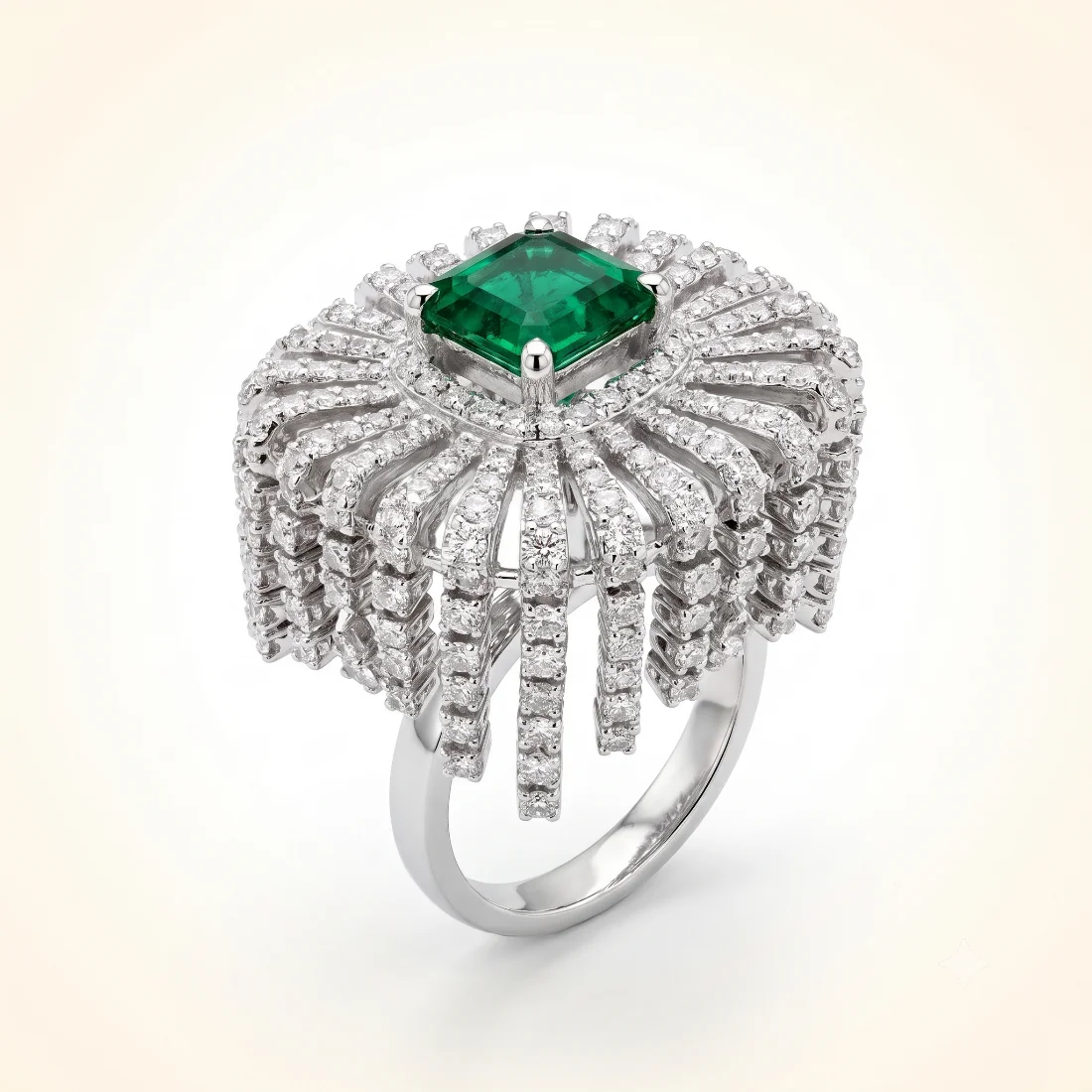
Two quotes arrive for the same ring. One says ₹73,701. The other says ₹73,701 as well, but split into four lines. The total is identical, so the difference is not price. It is what you can verify before you pay anything.
The same ring, written two ways
| Line | Itemised | Lump sum | What the itemised line lets you check |
|---|---|---|---|
| Gold 5.5 g at ₹11,210 | ₹61,654 | — | The rate against today's market, and the weight against the hallmark |
| Making at ₹1,800/g | ₹9,900 | — | Whether the labour is per gram or a percentage, and how much |
| Stones | nil | — | Cut, colour, clarity and carat, per stone |
| GST 3% | ₹2,147 | — | Whether tax is applied to the whole total |
| Total | ₹73,701 | ₹73,701 | — |
| Lines you can verify | 4 | 0 | — |
What a single number conceals
A lump sum is not dishonest by itself. Plenty of jewellers work that way because it is simple and the customer asked for a bottom line. The problem is arithmetic: with one number, every internal decision is invisible. You cannot tell whether the gold rate used was today's or last month's, whether the making charge is ₹1,200 or ₹3,000 per gram, or whether the diamonds were priced at their grade or at a better one.
This is where a low headline can mislead. A quote that undercuts another by ₹4,000 may be using a gold rate two weeks old, or a lighter band, or stones a grade below what was discussed. Nothing in the total reveals which.
The three ways a lump sum goes wrong
A stale rate. Gold moves daily. A quote built on a rate from ten days ago can be either generous or expensive depending on direction, and the customer has no way to know which. Ask for the rate and the date.
Invisible weight. The finished piece may weigh less than assumed, with the difference absorbed silently into the total. In an itemised quote the weight is a line, and the piece is weighed in front of you.
Substituted stones. A total that includes "diamonds" without grades cannot be checked after the fact. Once set, a stone a grade lower looks almost identical to the eye and differs substantially in price.
What itemising does not fix
An itemised quote can still be wrong, just visibly. If the gold rate is inflated, the rate is right there on the page and can be compared against the market. If the making charge is high, it is a stated number you can accept or refuse. The format does not make a quote fair. It makes unfairness detectable, which is the more useful property.
It also survives a change. If you alter the design after the first quote, an itemised estimate shows exactly which line moved. A lump sum requires a new conversation from the beginning.
Frequently asked
Is an itemised estimate more expensive?
No. The total is the same arithmetic either way. Itemising changes what is visible, not what is charged.
What should an itemised jewellery quote contain?
Four things: net gold weight and karat with the rate used, diamond or gemstone specification by grade and carat, the making charge stated as either a per gram rate or a percentage, and GST at 3 per cent on the total.
Can I ask a jeweller to itemise a quote?
Yes, and a refusal is informative. Any workshop that knows its own costs can produce the four lines in a few minutes.
Send a photo of the piece you have in mind and the reply lists gold, diamond, making and GST separately, at the rate on the day, within twenty four hours. It is yours whether you order or not.
More in the Journal
Send a photo, get an itemised estimate
Tell us what you have in mind and we will reply with the gold, the diamond, the making charge and GST listed separately. It is free, it is yours to keep, and there is no obligation to order.
Get an estimate