Journal
Lab-grown and natural diamonds, what actually differs
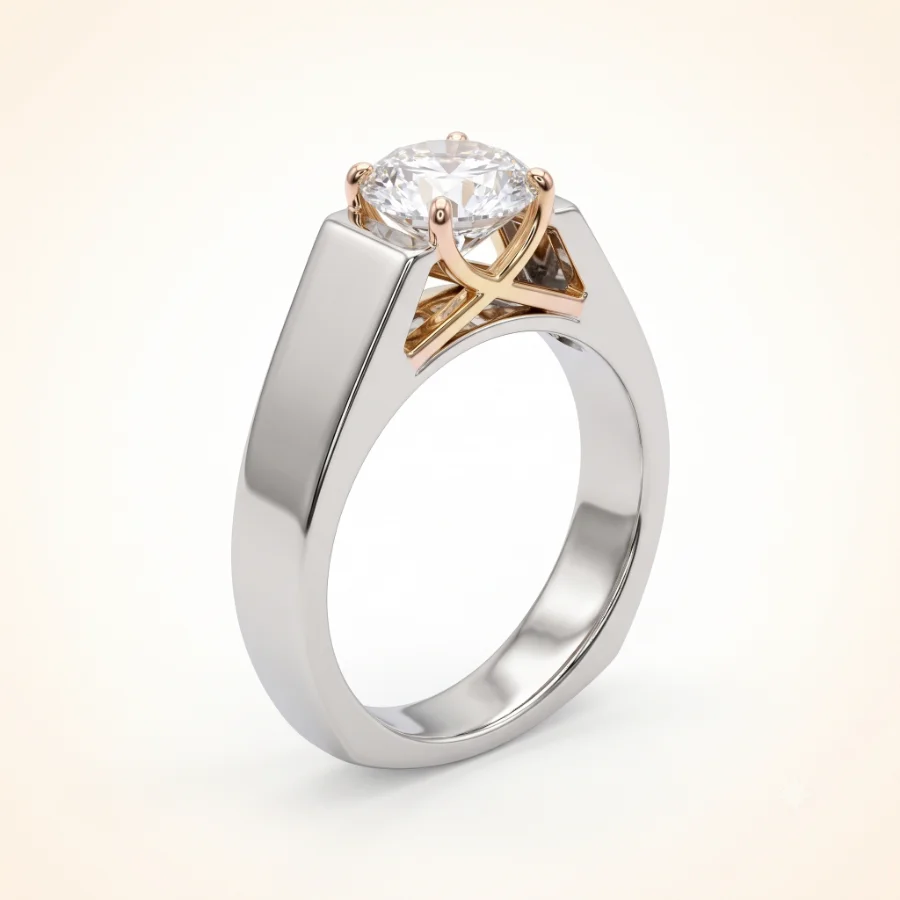
A person selecting a diamond for an engagement ring in Mumbai encounters strong arguments from advocates of mined gems and proponents of laboratory creation. The conversation often mixes personal sentiment, trade traditions, and physical facts without clarifying practical realities. Understanding the distinction requires setting aside sales rhetoric and examining how each gem is produced, tested, documented, and set.
How each one comes to exist
A natural diamond crystallises under intense heat and crushing pressure deep within the mantle of the earth. Carbon atoms bond into a rigid crystal lattice over vast geological epochs before ancient volcanic eruptions carry the crystals toward the surface of the earth. These rough crystals are recovered from deep volcanic pipes or riverbed deposits before being classified and cut. A lab-grown diamond begins with a thin sliver of diamond seed placed inside a specialised growth chamber engineered to replicate those underground conditions. Modern methods introduce carbon gases under high thermal energy or utilise molten metal alloys under mechanical pressure to deposit carbon atoms onto the seed. The rough crystal grows in this controlled environment until it reaches the required dimensions for fashioning. While a crystal from nature originates in the deep earth and an engineered stone originates in a laboratory facility, both processes transform elemental carbon into solid crystalline diamond. Skilled craftsmen then cut, shape, and facet the resulting rough on a polishing wheel using identical lapidary disciplines.
What is genuinely the same
Chemically and crystallographically, a laboratory diamond and an earth-mined diamond are the identical material. Both consist of carbon atoms arranged in an isometric crystal system, meaning their atomic architecture is completely indistinguishable. Because their atomic bonds are identical, both varieties share the exact same physical hardness, making them equally resistant to abrasions, scratches, and everyday wear over a lifetime. Their optical performance is likewise identical, as both gems possess the same refractive properties, light dispersion, and fire when cut to disciplined proportions. When placed side by side under natural daylight, an observer cannot tell them apart by looking at light return, transparency, scintillation, or polish. Neither variety will turn cloudy over time, alter in colour, or lose its surface lustre when exposed to daily domestic wear. Because the underlying mineral substance is the same, both stones withstand household cleaning agents, hot water, skin oils, and ambient humidity without suffering chemical alteration.
What a grading report says about each
Independent gemological laboratories evaluate both types of stones, but the resulting grading report clearly states the origin of the material. A report for an earth-mined diamond assesses the colour grade, clarity characteristics, polish, symmetry, and cut proportions while designating the stone as a natural diamond. When an independent gemological facility grades a laboratory-created stone, the report states plainly that the diamond is laboratory grown, often detailing the specific growth method used during its manufacture. Most independent laboratories also apply a microscopic laser inscription to the thin edge of the girdle, etching the report number alongside explicit wording that denotes laboratory creation. This permanent inscription corresponds directly to the physical document, ensuring that any trained gemologist examining the gem under magnification can confirm its identity immediately. Professional grading standards strictly separate natural stones from manufactured stones to maintain complete clarity for consumers. The paperwork exists precisely to record these facts, meaning a buyer should always receive an independent grading report that confirms the identity of the diamond in writing.
How to tell which one you are looking at
It is impossible to tell a laboratory-grown diamond from a natural diamond using an unaided eye, a standard jeweller loupe, or a basic optical microscope. Handheld thermal testers and standard diamond testing pens will register both stones as genuine diamond, because both share identical thermal and electrical properties. Accurate identification requires advanced gemological instruments that examine the stone under specific wavelengths of ultraviolet light, photoluminescence spectroscopy, and deep absorption analysis. Natural diamonds generally contain trace nitrogen atoms configured in aggregated clusters that form only through prolonged residence in the earth mantle. Laboratory diamonds, by contrast, exhibit distinctive metallic inclusions, isolated nitrogen patterns, or characteristic growth banding that reveal their synthetic origin under technical testing. These specialised spectroscopic screening instruments are housed in professional gemological laboratories and dedicated diamond procurement hubs rather than standard retail counters. Because visual identification is impossible without advanced analytical equipment, transparent documentation and full commercial disclosure from the seller are essential protections for the consumer.
Questions worth asking before you choose
A purchaser choosing a diamond for a bespoke ring should begin by asking whether the merchant provides clear, written disclosure of origin across all receipts and invoices. The written invoice should state without ambiguity whether the stone is natural or laboratory grown so that the provenance is permanently established. A buyer should ask to see the independent laboratory grading report that confirms the cut, colour, clarity, and specific origin of the mounted diamond. It is wise to inquire about the cut proportions and light performance of the individual gem, as cut execution dictates sparkle far more than crystal origin. A client should also inquire whether the ring will be made to order around the specific dimensions of the stone to ensure structural integrity and a balanced aesthetic. Furthermore, asking how the maker sources its materials and constructs the setting helps clarify whether the piece is manufactured directly or passed through intermediary suppliers. Clear questions regarding documentation, origin, and craftsmanship allow a buyer to choose with confidence based on personal taste and factual clarity. Trilliant Jewels works with Veer Mehta, a GIA Graduate Gemologist, to provide clarity on every stone and setting. A request is answered with a free itemised estimate listing gold, diamond, making and GST separately, with a stated 24-hour turnaround. This itemised estimate is kept by the client whether the piece is ordered or not.
More in the Journal
Send a photo, get an itemised estimate
Tell us what you have in mind and we will reply with the gold, the diamond, the making charge and GST listed separately. It is free, it is yours to keep, and there is no obligation to order.
Get an estimate